.svg)

Midtown Manhattan History and the Rise of NYC Theater
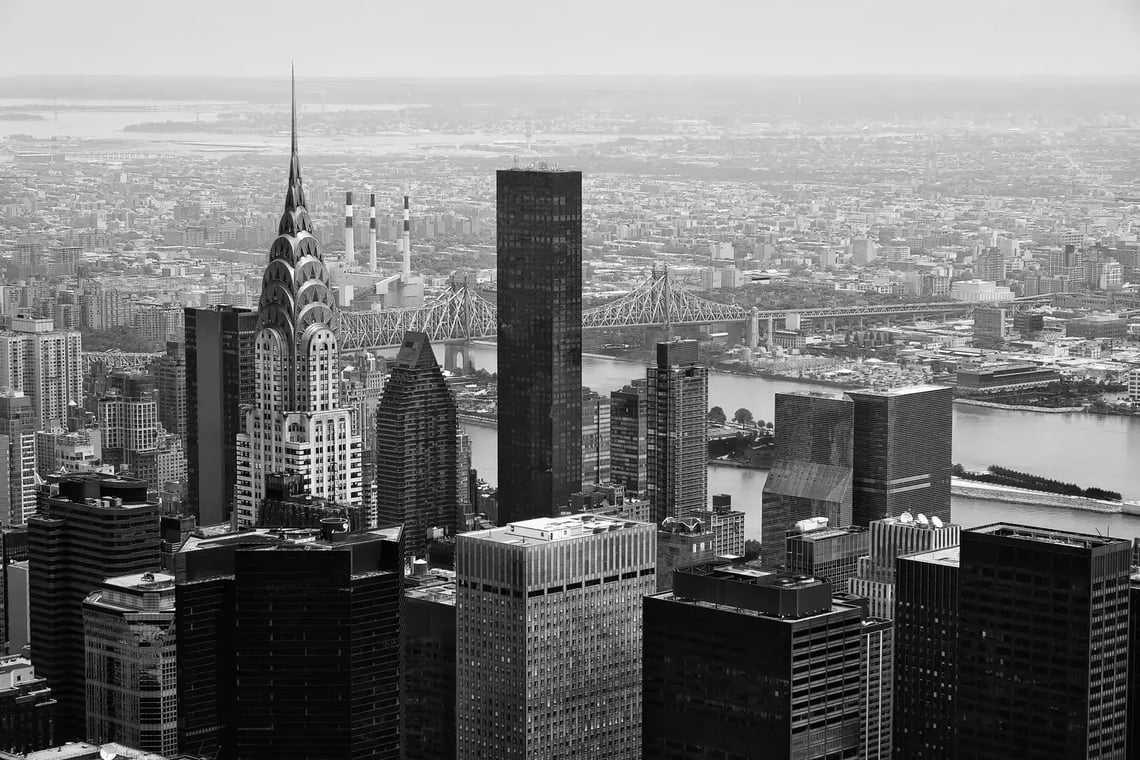
The history of Midtown Manhattan is a story of reinvention. Long before bright marquees, yellow taxis, and the electric hum of Times Square, this stretch of land was quiet and pastoral. In the 18th century, much of what we now know as Midtown was farmland, dotted with country estates and rocky outcroppings far north of the bustling colonial port at the southern tip of Manhattan. It was considered remote, hardly the commercial and cultural crossroads we recognize today.
As New York City grew northward in the 19th century, the grid plan of 1811 carved order into fields and forests, laying the foundation for transformation. Railroads accelerated the development of Midtown Manhattan, particularly with the expansion of transit corridors that connected downtown commerce to emerging residential neighborhoods. What had once been rural terrain began evolving into the spine of a modern metropolis.
Railroads, Skyscrapers, and the Development of Midtown Manhattan
No chapter in Midtown Manhattan history is complete without Grand Central Terminal. Opened in 1913, this Beaux-Arts masterpiece symbolized the ambition and optimism of a rapidly industrializing city. Today, Grand Central Terminal is about a 10-minute rideshare (approximately one mile) from The Belvedere Hotel.
When it debuted, Grand Central did more than move passengers; it reshaped the neighborhood. Air rights allowed developers to build above the tracks, ushering in a new era of vertical architecture. Skyscrapers soon rose along Park Avenue, transforming the skyline and defining the development of Midtown Manhattan as a commercial powerhouse. The Chrysler Building and other Art Deco icons followed in the 1920s and 1930s, embodying the city’s growing confidence.
Midtown was no longer farmland. It was the future.
The Rise of Broadway and the Theater District
While railroads fueled commerce, another force shaped the cultural history of NYC: Broadway. At the turn of the 20th century, theaters migrated uptown from Union Square and Madison Square, drawn by cheaper land and improved transportation. Electric lighting, nicknamed the “Great White Way”, made nighttime performances safer and more alluring. Crowds followed.
The Theater District history in NYC is one of glittering premieres and cultural milestones. Historic venues like the Lyceum Theatre (opened in 1903) and the New Amsterdam Theatre (opened in 1903) became cornerstones of Broadway’s golden age. The New Amsterdam Theatre, about a 10-minute walk (0.5 miles) from The Belvedere Hotel, stands as a stunning example of Art Nouveau design and theatrical grandeur. The Lyceum Theatre is even closer, approximately an 8-minute walk (0.4 miles) away.
As vaudeville evolved into full-scale musicals and dramatic productions, Broadway cemented its reputation as the heart of American theater. The surrounding blocks filled with restaurants, hotels, and neon signs, creating a self-sustaining entertainment ecosystem. The Theater District became not just a destination, but an identity.
Times Square and the Cultural Pulse of the City
The intersection of Broadway and Seventh Avenue at 42nd Street, now Times Square, became the epicenter of this transformation. Named in 1904 after The New York Times moved its headquarters there, the square quickly grew into a symbol of the city’s ambition and spectacle.
By the 1920s, Midtown Manhattan history was inseparable from the dazzle of Times Square. Theaters premiered groundbreaking works, jazz clubs thrived, and the streets buzzed with anticipation each evening. Although the area experienced a decline in the mid-20th century, revitalization efforts in the 1990s restored it to prominence, reinforcing its role in the broader New York City neighborhood history.
Today, Times Square is about a 5-minute walk (0.2 miles) from The Belvedere Hotel. Its flashing billboards and constant motion echo the same spirit of reinvention that has defined Midtown for centuries.
The Belvedere Hotel and a Century of Stories
Amid this evolving landscape stands The Belvedere Hotel, which was completed in 1926. As the hotel celebrates its 100th anniversary, it becomes part of the very story it overlooks. Built during the height of Midtown’s theatrical and architectural boom, The Belvedere embodies the elegance and optimism of the Roaring Twenties.
When the hotel first welcomed guests, Broadway was flourishing, Art Deco skyscrapers were rising, and Midtown Manhattan was solidifying its reputation as the cultural and commercial heart of the city. Over the decades, The Belvedere has witnessed premieres, standing ovations, and the steady evolution of the surrounding neighborhood.
In many ways, The Belvedere serves as a living chapter in the cultural history of NYC. Its walls have sheltered actors, tourists, and dreamers drawn to the bright lights of Broadway. Its location in the heart of the Theater District makes it a bridge between past and present.
From Farmland to Footlights
The journey from open fields to illuminated marquees captures the essence of the history of Midtown Manhattan. What began as distant countryside became a transportation hub, then a skyline of ambition, and ultimately a global symbol of entertainment and culture.
The layered narrative of Midtown Manhattan's history reflects the broader history of New York City's neighborhoods, one defined by resilience, reinvention, and relentless energy.
Plan Your Midtown Stay
To fully experience the development of Midtown Manhattan and immerse yourself in the Theater District history in NYC, consider staying at The Belvedere Hotel. During its 100th anniversary, there is no better place to connect with the rich cultural history of NYC than right here in the heart of it all.
Book your room at The Belvedere Hotel to experience the living history of Midtown Manhattan.